


Indoor air quality has become a significant concern in Indian homes and offices. With rising pollutant levels, allergens, dust, and VOCs (volatile organic compounds) from cleaning products and furnishings, many consumers are now actively seeking solutions. This guide to the Top air purifiers in India will help you navigate the current market, understand why air purifiers have become essential, evaluate your needs (room size, budget, features), compare top models, and finally pick the right one for your space. Whether you’re looking for an affordable unit for a bedroom or a more premium purifier for a living room or home office, the following list covers ten strong contenders with prices and buying pointers.
Why are air purifiers becoming a necessity?
Several interlinked factors are driving the uptake of air purifiers in India:
- Outdoor air pollution spill-in: Many cities and suburbs exceed safe levels of PM2.5 and PM10, which penetrate indoor spaces through windows and ventilation. Once inside, these particles settle, re-circulate, and pose health risks.
- Indoor pollution sources: Cooking (especially frying), use of aerosols, paints, new furniture, cleaning chemicals, and even pet dander all contribute to poor indoor air quality. In a time when people spend more hours indoors (remote work, etc.), this becomes more relevant.
- Allergy, asthma & respiratory sensitivity: People with allergies or asthma increasingly seek filtration solutions to reduce triggers—from dust mites, pollen, dander, and mould spores. High-efficiency air purifiers can deliver a measurable reduction in allergen load.
- Focus on health & well-being: With growing health awareness, consumers view air purifiers not just as optional appliances, but as preventive-health tools. Cleaner air supports better sleep, fewer respiratory episodes, improved comfort, and cognitive clarity.
- Technological affordability and awareness: Compared to a few years ago, true-HEPA filtration, smart sensors, auto-modes, and online purchasing make these devices more accessible to more households. Also, the marketing around “PM2.5 removal”, “true HEPA” and “activated carbon + odour” is better understood by many.
- Better indoor-outdoor integration: With remote work, video-conferencing, homeschooling, and more time spent indoors, the boundary between “home comfort” and “health appliance” is blurring. A good air purifier now complements other indoor-comfort equipment (ACs, humidifiers, etc.).
Because of all these factors, a strong case can be made that air purifiers are no longer a luxury but a household necessity in many Indian homes—especially in urban and peri-urban environments. Understanding your requirement and selecting the right unit matters.
How to choose the perfect air purifier based on requirements (room size, budget, features)
When evaluating an air purifier, think in terms of three core dimensions: coverage/room size, budget/operating cost, and feature-set vs filtration quality.
- Room size/coverage
- The key spec to check is the Clean Air Delivery Rate (CADR) or the manufacturer-specified coverage area (in square feet or square metres). A model rated for 150 sq ft will struggle in a 300 sq ft living room.
- For bedrooms (100-200 sq ft) you can choose smaller, quieter units; for open-plan living/dining areas (300-500 sq ft) or multi-room coverage, you need higher CADR and stronger circulation.
- Also consider placement: ideally central, away from major obstructions; avoid hiding behind furniture. A purifier with oscillation/powerful circulation helps distribute clean air instead of having it sit in one corner.
- Budget & ongoing costs
- Entry-level units can cost under ₹10,000 (but may have limited coverage and fewer features). Mid-range units (₹12,000-₹25,000) offer better coverage, true HEPA filters, and more features. Premium models may cost ₹30,000+ and add smart features, very large coverage, ultra-quiet fans, etc.
- Operating cost: Consider filter replacement cost (HEPA + activated carbon filters), energy consumption (especially if run 24/7), and noise levels (important for bedrooms).
- If budget is tight, prioritise true HEPA + activated carbon filter + adequate coverage rather than paying for ultra-premium add-ons you may not use.
- Filtration quality & extra features
- Filter type: “True HEPA” (captures ~99.97% of particles 0.3 μm) is preferred for particle removal. For odour/chemical control you also need activated carbon or additional layers.
- Sensor and auto mode: Some models include PM sensors, VOC sensors and adjust fan speed automatically; helpful for convenience and energy-efficiency.
- Noise/night mode: For bedrooms, you want low-noise (<30 dB) night mode or a very quiet minimum fan speed.
- Smart features/circulation: Some units integrate with apps, voice assistants, WiFi, or combine purifier + air-circulator (fan) for improved distribution.
- Maintenance/filter life/service: Ensure replacement filters are available locally, check warranty, and service network.
Summary checklist
- Match room size to CADR/coverage.
- Balance upfront cost vs operating cost.
- Prioritise filtration quality (HEPA + carbon) over purely smart features.
- For bedrooms, choose quiet, low-wattage models; for living areas, choose strong circulation.
- Check filter availability, warranty, and reviews for reliability.
List of the 10 top air purifiers in India
Here are ten models selected for a cover range of budgets, coverage sizes, and feature sets:
- Acerpure Cool AC551 50W — The Acerpure Cool AC551 50W sits at the top for its blend of energy-efficient operation, compact footprint, and multi-stage filtration that targets PM2.5, odors, and VOCs. Designed for small to medium rooms, it’s positioned as a strong value pick for bedrooms and study areas where low noise and reliable particle removal matter. This model appeals to buyers looking for a budget-friendly HEPA solution with modern controls.
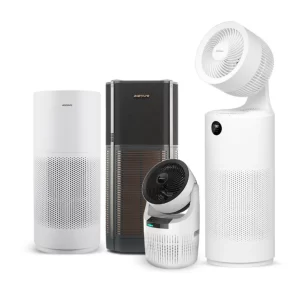
- Acer Air Purifiers
- Dyson Pure Cool (tower model) — Dyson’s tower purifiers double as bladeless fans and excel in distributing cleaned air across medium to large rooms. They typically offer high CADR performance and smart-home integration, making them attractive to tech-forward buyers who want real-time air quality monitoring and sleek design.
- Philips Series 3000i — Philips’ Series 3000i units are known for balanced performance, reliable sensor accuracy, and low-maintenance filter replacement cycles. These purifiers are frequently recommended for families and open-plan living areas because they combine allergen-focused filtration with quiet operation.
- Acerpure Cool AC553-50W — The Acerpure Cool AC553-50W appears at number four and is favored for slightly higher airflow and a larger coverage area compared with the AC551. It’s a sensible choice when you need stronger circulation in living rooms or combined dining-living spaces while keeping energy consumption modest.
- Mi Air Purifier 3H / latest variant — Xiaomi’s Mi Air Purifier offerings are popular for their cost-to-performance ratio. They typically include true HEPA filters, app controls, and compact designs suitable for small to medium rooms, making them a go-to option for value-conscious shoppers seeking affordable HEPA air purifiers.
- Honeywell Air Touch Series — Honeywell models often emphasize robust filtration and simple user interfaces. They are commonly selected for bedrooms and nurseries where dependable allergen removal and easy upkeep are priorities.
- Blueair Classic or Blue Pure line — Blueair brings high-efficiency filtration with low airflow resistance, which translates to quieter operation and strong clean-air delivery in medium to large rooms. Their purifiers are frequently recommended for users prioritizing PM2.5 removal and low-noise performance.
- LG PuriCare / Dual Inverter models — LG’s air purifiers integrate well into modern homes and often include features like auto mode, multi-sensor systems, and energy-efficient fans. They suit users who want a reputable brand with solid after-sales service and reliable performance.
- Samsung Cube or AX series — Samsung’s purifiers typically combine smart features with effective particulate filtration and are a good fit for connected homes that want app control, voice assistants, and modern aesthetics.
- Havells / Kent home-series purifiers — These brands offer practical, budget-aligned models aimed at smaller homes and individual rooms. They are chosen by users who want basic true HEPA filtration without premium pricing.
Comparison Table: Quick specs & buying guidance
| Model | Approx Price (INR) | Recommended Room Size / Comments | Why Buy It |
|---|---|---|---|
| Acerpure Cool AC551 50W | ~ ₹21,990 | Small-medium rooms (~484 sq ft) (Gadgets 360) | Strong HEPA + 2-in-1 purifier + circulator, smart sensor |
| Philips Series 3000i | ~ ₹24,990 | Medium rooms, open-plan | Balanced features & brand reliability |
| Mi Air Purifier 3H | ~ ₹12,499 | Small-medium bedrooms | Best value for budget HEPA purifier |
| Honeywell Air Touch Series | ~ ₹8,599 (entry) | Bedrooms / allergy-sensitive zones | Simple interface, strong filtration |
| Blueair Classic / Blue Pure | ~ ₹29,999 | Medium-large rooms | Quiet operation + high efficiency |
| LG PuriCare series | ~ ₹43,580 | Large open areas, premium homes | Smart features, strong coverage, brand service |
| Samsung AX series | ~ ₹11,999 (entry) | Small to medium rooms | Smart home integration + HEPA filtration |
| Havells Meditate AP 250 Smart | ~ ₹18,999 | Medium rooms | Indian brand, good feature set for price |
| LG PuriCare 360° AS60GHWG0 | ~ ₹33,085 | Larger rooms, premium segment | Higher coverage + WiFi + premium build |
| Havells Freshia AP-58 | ~ ₹9,999 | Smaller rooms (<150 sq ft) | Budget pick for simple room use |
Note: Prices vary by retailer, sales, availability, and time. Always check the latest offers, filter replacement cost, warranty, and availability of spares locally. Also, “room size” is a guideline—look for CADR or stated coverage area (in square metres) rather than just brand claims.
FAQs
Q1: Is a HEPA filter really necessary?
Yes. For effective removal of fine particles (PM2.5, allergens, pollen, dust mites), a true HEPA filter captures ~99.97% of particles sized around 0.3 microns under standard test conditions. Models that claim “HEPA-grade” or “HEPA-type” may not meet the full HEPA standard. If you’re concerned about air quality, go for true HEPA + activated carbon for odour/VOC removal.
Q2: Will an air purifier remove viruses or bacteria?
Air purifiers help by removing airborne particles that may carry bacteria or viruses, and some models add ionisers or UV-light features. However, they are not a replacement for ventilation, hygiene, masks, vaccination, or other infection-control measures. They are best seen as part of a broader indoor-air strategy.
Q3: How often do filters need replacing, and how much does it cost?
Filter life depends on pollution levels and the period of use. In Indian environments with high dust/pollution load, filters may need replacement every 6-12 months. Activated carbon layers may wear out sooner. Replacement cost can range from a few thousand rupees per year, depending on the model. Always budget for ongoing filter cost, not just upfront device cost.
Q4: Do I need more than one purifier for my house?
It depends on the house layout and size. For a typical 2-3 bedroom apartment, one unit may suffice if placed centrally and rated for the largest room. But if you have separate bedrooms, an open kitchen or living area, and bedrooms used simultaneously, you may benefit from one device in each bedroom or a higher-coverage unit for the living area plus a compact one for sleeping rooms.
Q5: Can I rely solely on an air purifier instead of opening windows?
While air purifiers help filter indoor air, fresh outdoor air and ventilation remain important for overall indoor-air quality (removing CO₂ build-up, humidity, odours, chemicals). Use a purifier plus occasional fresh air intake (when outdoor pollution allows) for best results. In high-pollution scenarios, purifier + sealed windows + mechanical ventilation may be optimal.
Q6: Is smart/app control worth the extra cost?
Smart features (air-quality sensors, auto mode, WiFi/app control) give convenience and sometimes improved energy efficiency because the device adjusts fan speed as required. If you continuously run the purifier or are tech-savvy and monitor indoor air quality, it’s worth it. If you just want “plug & forget” filtration, a simpler model may suffice and save cost.
Conclusion
If you’re on the hunt for the Top air purifiers in India, this guide has laid out key models across budgets, detailed buying guidance, and a comparison framework to help you pick the right one. Start by assessing your room size, your primary concerns (allergens, PM2.5, odour), and your budget. Prioritise a unit that supports your coverage needs, uses a true HEPA filter plus activated carbon, has acceptable noise levels and manageable ongoing costs. The models listed above—from Acerpure Cool AC551 50W (our top pick for value and performance) to higher-premium units like LG PuriCare or Blueair—cover a broad spectrum of needs. Clean indoor air isn’t just a comfort upgrade—it’s increasingly a health investment. Take your time, check local availability and filter-replacement support, and you’ll make a choice that really enhances your indoor environment.
Also read from the author – Best TVs for Gaming: Top Choices for Gaming Enthusiasts in 2025
Join us on LinkedIn for quick updates – FYI9 News LinkedIn